Assistant + Stylist + Consultant expert roles
System Prototype / Method Archive
case 02Multi-agent outfit recommendation system
Early system prototypeBreaks outfit recommendation into task modules such as layered knowledge, tree-structured reasoning, explanation paths, staged evaluation, role specialization, and multi-role interaction.Inherits the key strengths of StePO-Rec and prepares the core method base for later OUTFITTED applications.
Graph-based collaboration mechanism
PAFA knowledge base + StePO-Rec multi-step reasoning + user archive management
Role-Based Agent System
Agent Role Definition
Clear specializationComplementary capabilityPersonified design

AssistantAgent
Personal assistant

Function
Need parsing / task routing / coordination
Dependency
Profile context + dialogue state + service strategy
Output
Structured task, clarifying questions, route judgment
Tone
Gentle, guiding, patient
Acts as the coordinator: interprets user input, extracts tasks, loads profile context, and orchestrates the rest of the pipeline.

StylistAgent
Stylist

Function
Multi-direction generation / style expansion / design rationale
Dependency
PAFA + StePO-Rec + scenario constraints
Output
Directions, item combinations, recommendation rationale
Tone
Professional, confident, aesthetic
Generates outfit directions through staged color and silhouette reasoning, rather than jumping directly to a final answer.

ConsultantAgent
Image consultant

Function
Evaluation / optimization advice / growth record
Dependency
Evaluation system + feedback history + profile archive
Output
Scores, suggestions, growth insight
Tone
Rational, objective, constructive
Evaluates proposals across compatibility, personal fit, occasion fit, and fashion expression while also updating long-term user profiles.
Role Collaboration System
Knowledge-driven role collaboration structure
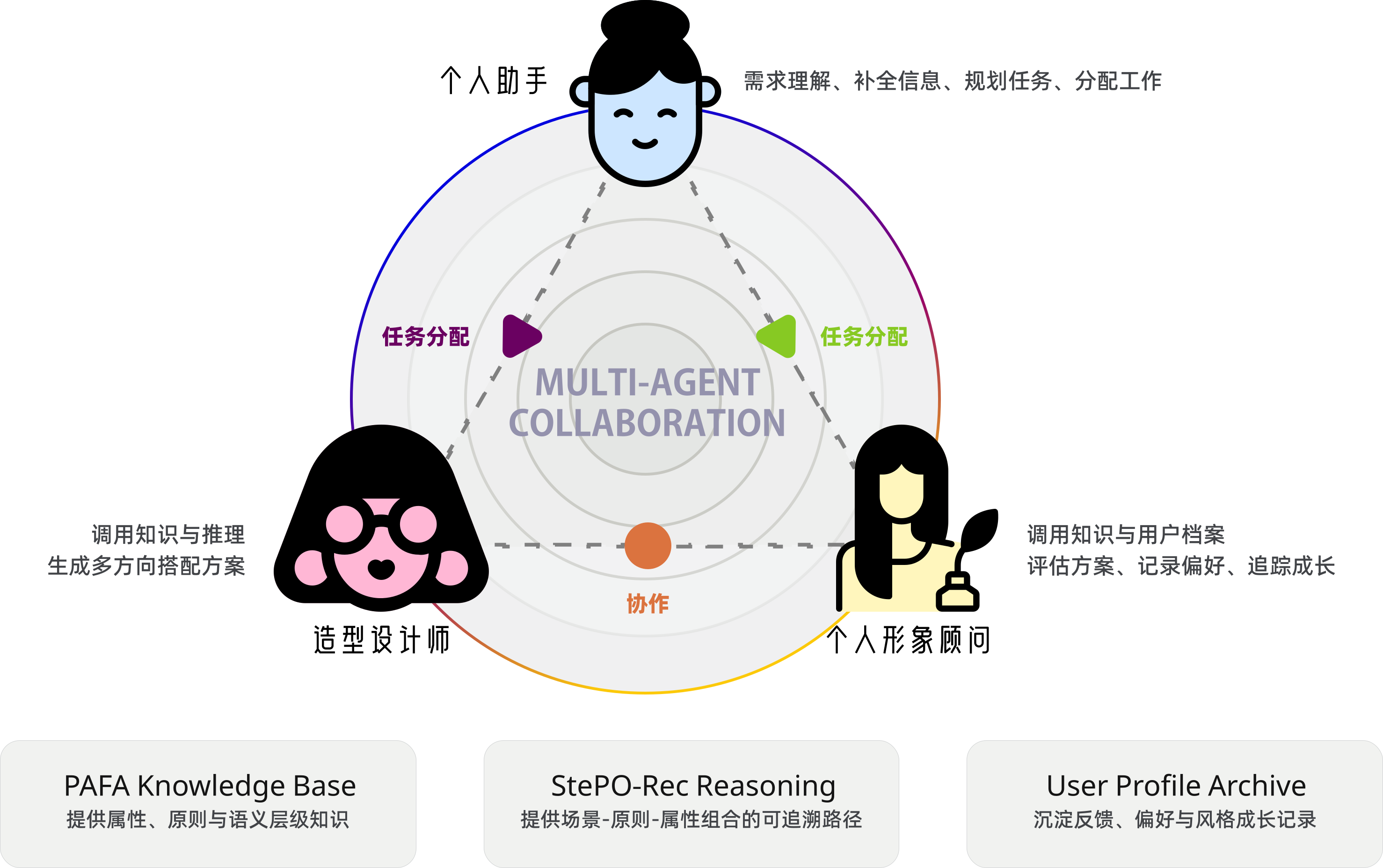
FashionAgent breaks need interpretation, outfit generation, professional evaluation, preference memory, and growth tracking into collaborative roles. Supported by the PAFA knowledge base, StePO-Rec multi-step reasoning, and user-archive management, the recommendation chain gains professional division of labor, explanation paths, state memory, and room to evolve.
This single diagram places the collaboration among Assistant, Stylist, and Consultant together with the three support layers of knowledge, reasoning, and user archive, making FashionAgent's service structure directly legible.
System Collaboration Orchestration
Agent Graph Orchestration
BranchableParallelIterative
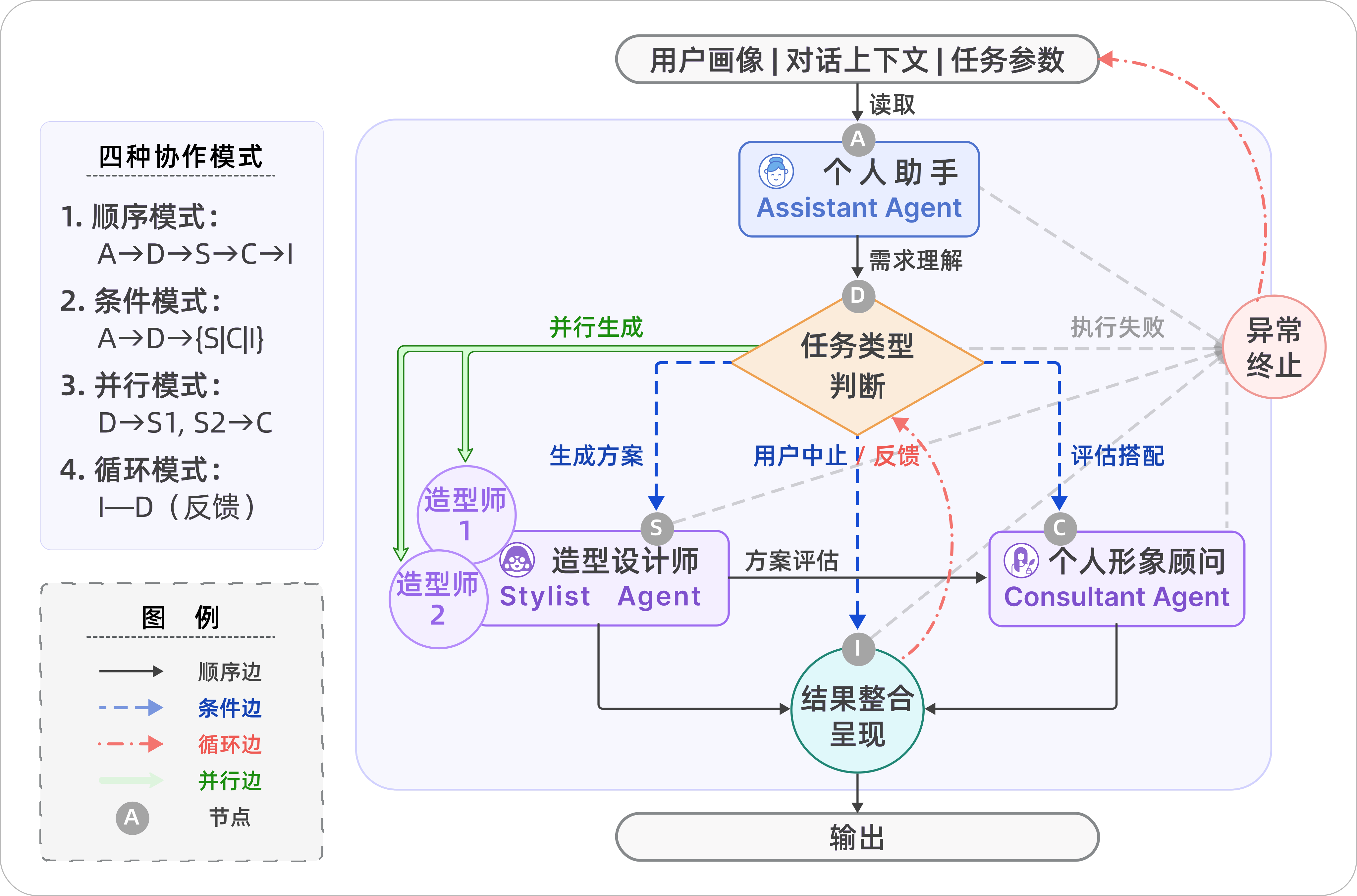
This is not a fixed workflow but a graph-based orchestration mechanism for complex tasks. The system dynamically selects execution paths according to task type, intermediate results, and user feedback, while global state management turns multi-role collaboration into a structure that is extensible, traceable, and rollback-capable.
01
Nodes
Agent execution nodes, decision nodes, and end nodes sit in one graph so role specialization and control logic remain visible together.
02
Edges
Sequential, conditional, loop, and parallel edges define different execution paths instead of forcing every request through one linear pipeline.
03
State
User profile, dialogue context, and task state are coordinated by the orchestration layer so the system can support memory, rollback, and multi-turn collaboration.
01
Sequential Mode
For standard requests, the chain moves through need parsing, proposal generation, professional evaluation, and response assembly.
02
Conditional Branching
The system decides whether Stylist or Consultant should be called, avoiding unnecessary steps and wasted compute.
03
Parallel Collaboration
Multiple style directions can be generated and evaluated in parallel, making richer comparison tasks possible.
04
Iterative Loop
User feedback updates global state and triggers new execution paths, allowing the recommendation to keep improving over time.
Innovation and Value
Innovation and Core Value
Knowledge modelingExplainable reasoningRole collaborationGrowth memory
FashionAgent was not built by writing a longer prompt, but by turning styling service into a method system that can be organized, traced, and continuously improved.
01
Problem
Core Question
How can multimodal user input be translated into professional and personalized outfit proposals?
Ambiguous Need Parsing
User intent often spans images, scenarios, taste cues, and implicit emotions, but ordinary dialogue systems struggle to organize those signals into executable styling tasks.
Generic and Weakly Professional
Without explicit fashion knowledge and role specialization, recommendations tend to stay generic instead of becoming professionally grounded outfit proposals.
Opaque and Hard to Trust
When the system cannot explain its basis, path, and trade-offs, users cannot judge reliability or continue refining the result with confidence.
02
Key Challenges
Knowledge Injection
How to insert fashion expertise into the recommendation chain instead of leaving it as background description.
Trusted Output
How to let the system personalize while still giving reasons that can be explained, compared, and trusted.
Personalized Proposal
How to make each output respond to scenario, taste, body-related concerns, and preference differences rather than returning a broadly acceptable but weakly personal answer.
Long-term Memory
How to record feedback, preference, and style change so recommendation becomes companionship rather than a one-off output.
03
Method System
The system brings knowledge, reasoning, collaboration, and memory into one service structure so complex styling tasks stop depending on black-box answers and become divisible, role-based, and reviewable.
PAFA Knowledge
Structures attribute, principle, and semantic knowledge as a professional judgment base.
StePO-Rec Reasoning
Narrows the solution space with tree-structured multi-step reasoning while keeping paths visible.
Role Collaboration
Assistant, Stylist, and Consultant split need parsing, generation, and evaluation responsibilities.
User Archive
Stores preference, feedback, and style evolution to create long-term memory.
04
Core Value
More professional
The system does not rely on generic LLM intuition alone but on explicit fashion knowledge.
More explainable
Users can see why an outfit is proposed, what principles were applied, and how to refine it.
More personalized
The system responds to current needs while also referencing accumulated preference and history.
More extensible
It is not a one-off demo but a method prototype that can grow into a product service chain.
That is also FashionAgent’s most important contribution to OUTFITTED: it validated a fashion-AI method framework able to carry expertise, role collaboration, user memory, and long-term companionship.
Interaction Validation
Interactive Prototype Design
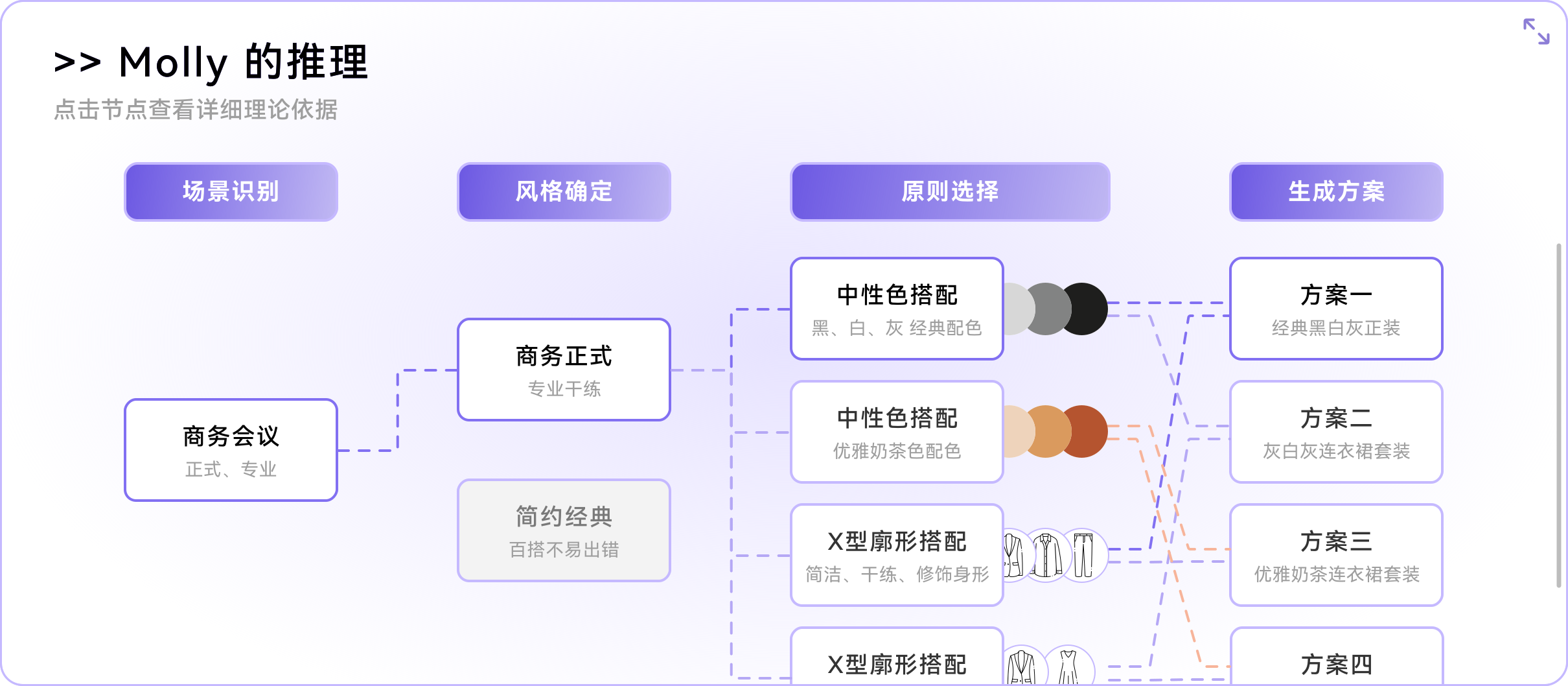
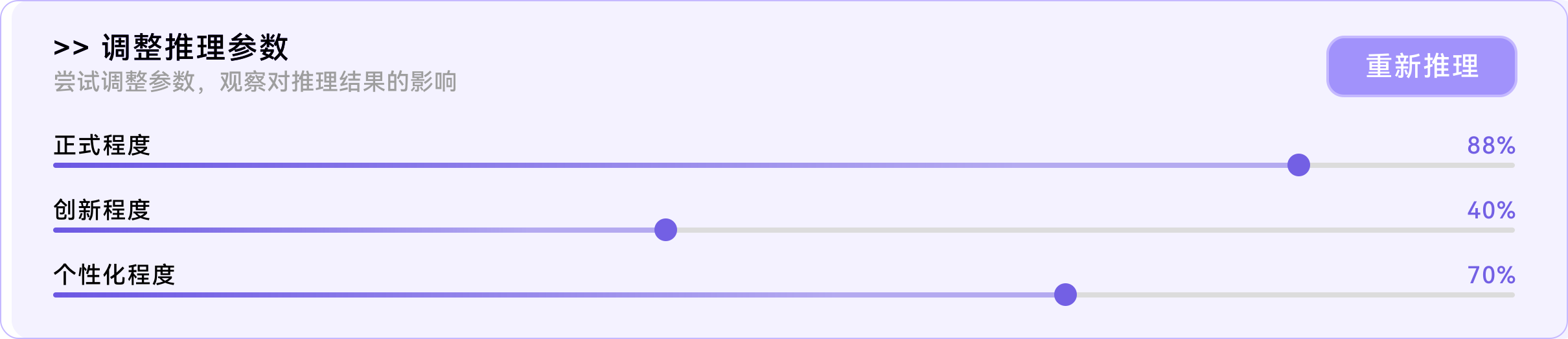
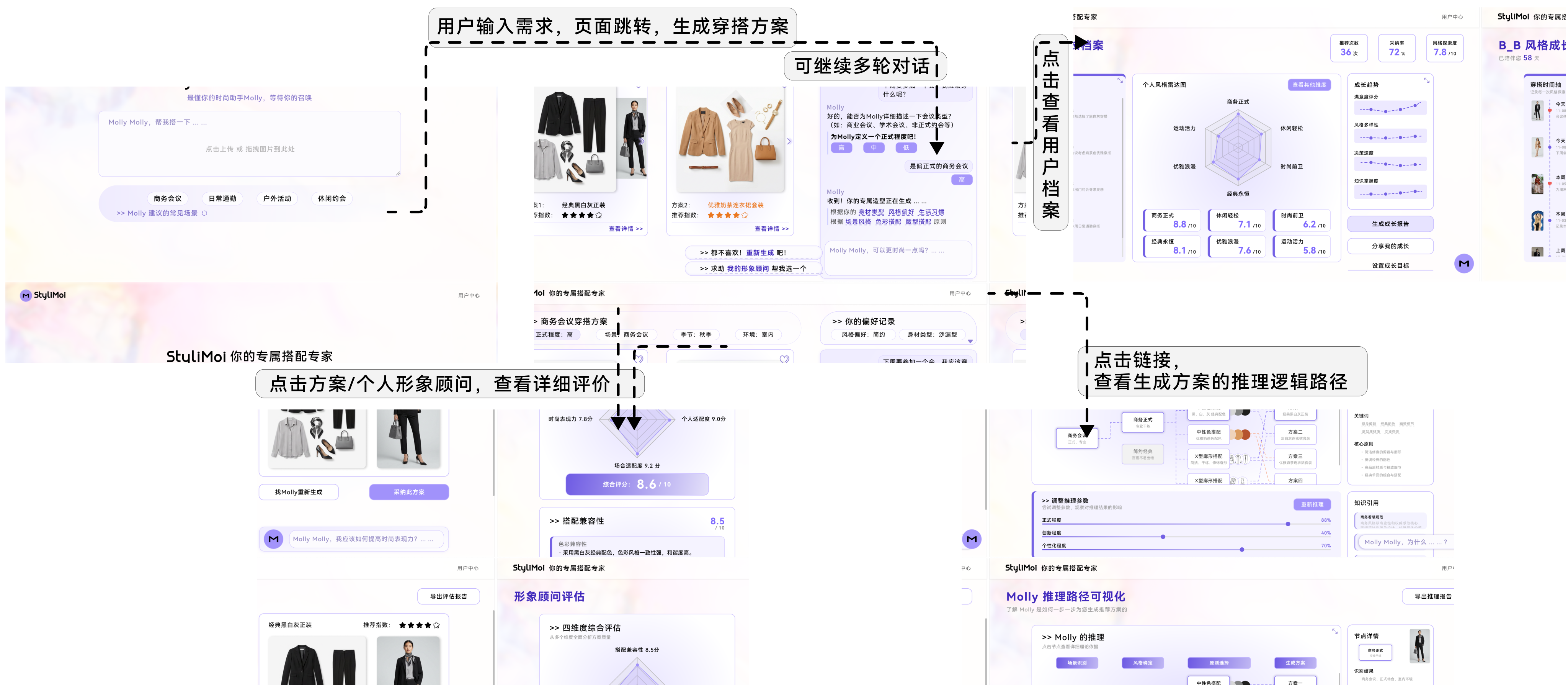
Result SurfacePath ExplanationParameter ControlGrowth Archive
05
Prototype Interaction Overview
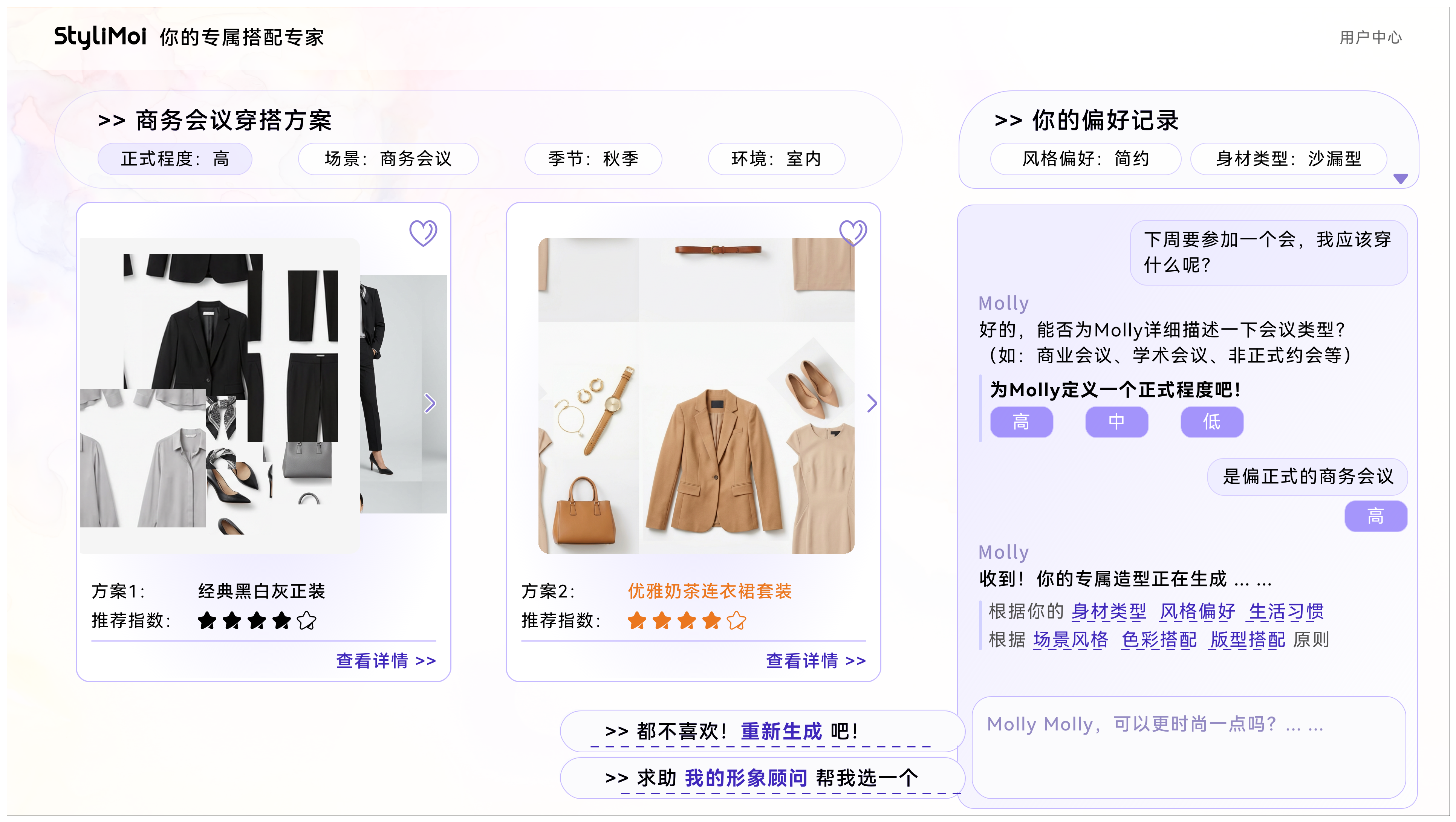
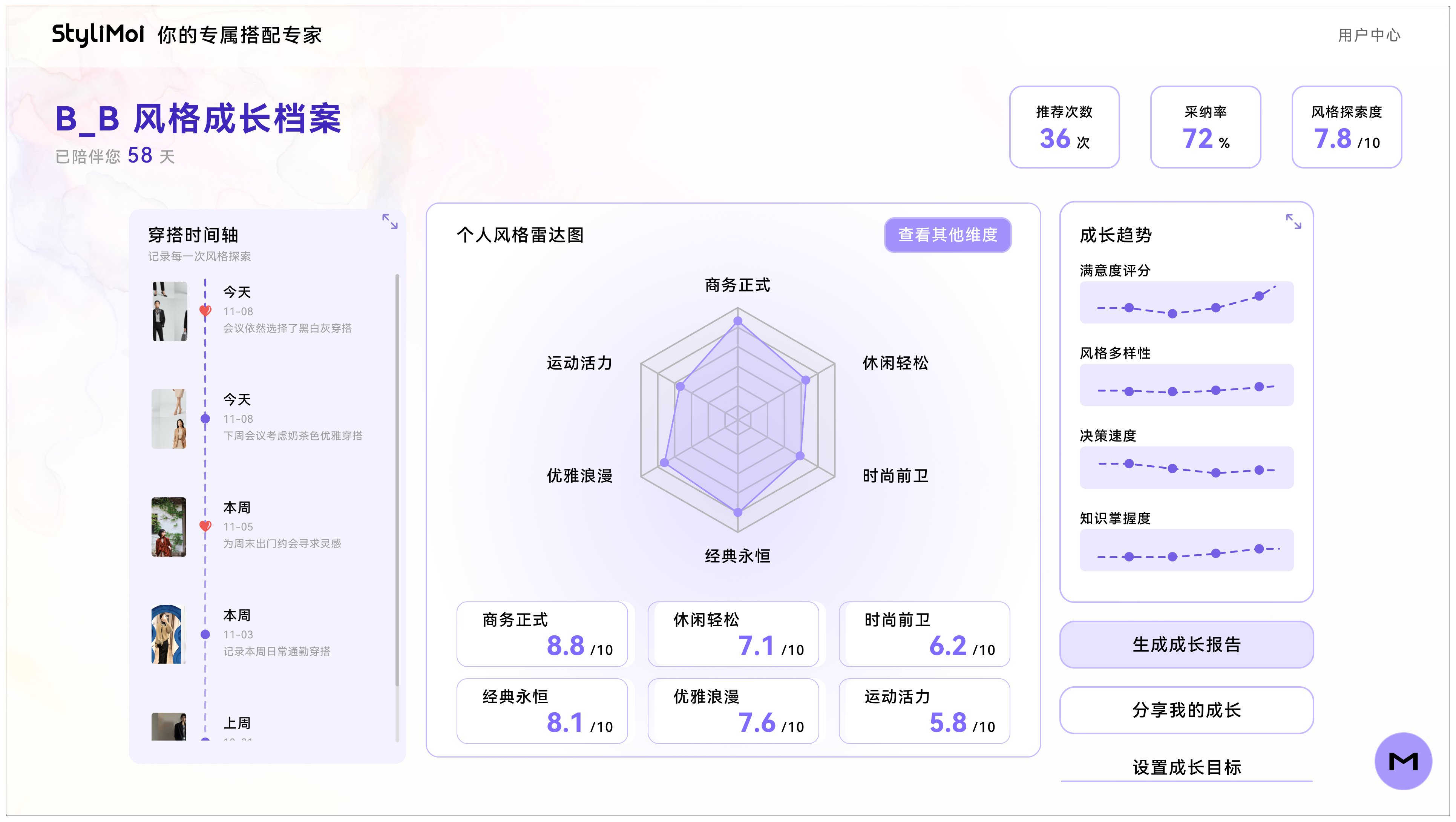
From input collection and proposal generation to consultant review, reasoning trace, and archive entry, FashionAgent already translates its method stack into an interactive loop that can be inspected, revisited, and evolved.
Validation
Experiment Design and Results
01
Validation Setup
30 test tasks
Covers standard recommendation, complex constraints, multi-option comparison, and iterative feedback to see whether the full chain remains stable across styling scenarios.
Single-agent baseline
Compared against an undivided baseline system to observe changes in success rate, professionalism, personalization, and explanation quality.
20-user evaluation
Recorded user preference on professionalism, naturalness, role consistency, and fit to need in order to test whether the personified service structure was genuinely useful.
Performance and observability
Logs, path inspection, batch evaluation, and token optimization were used to observe system cost and runtime behavior, reducing token usage by about 75% versus the early version.
02
Key Results
80.0%
Task success rate
Full-success rate on 30 test cases, clearly above the 46.7% single-agent baseline.
+47.9%
Average quality lift
Average improvement across professionalism, personalization, explainability, natural interaction, and role consistency.
85.0%
User preference
Share of users who explicitly preferred the multi-agent system over the single-agent baseline.
Value Summary
The method truly took shape
FashionAgent matters because it was the first time an AI-fashion idea became a verifiable, decomposable, and productizable method framework.
Structured Collaboration
Role decomposition and shared state were most effective in complex-constraint, multi-turn, and comparative tasks, showing that styling assistance benefits from structured collaboration.
Trust Building
Users were not only responding to stronger output quality, but also to the increased trust created by role consistency, readable reasoning paths, and service-like interaction.
Product Ground
Even with prototype-stage latency and immature visual generation, the method base that later enabled OUTFITTED had already been validated here.